
The Left-Click Slaughter
13,000 targets in 38 days, the computer code that selected them, and the hidden chain of command behind the child casualties in Iran.

The Pentagon used AI to strike 13,000 targets in 38 days, killed children in Iran, and made accountability nearly impossible.
On February 28, the United States killed children in Iran. The Pentagon denied responsibility. The law that makes this a war crime has never been used against a senior official. The names of the responsible individuals remain unpublished. They should be named.
The First Strike: Minab and Lamerd
On the first morning of Operation Epic Fury, a Tomahawk cruise missile struck the Shajareh Tayyebeh girls’ elementary school in Minab during morning classes. The principal moved her students to the prayer hall and called their parents. A second missile hit the prayer hall. At least 175 people died. Most were girls between seven and 12 years old.
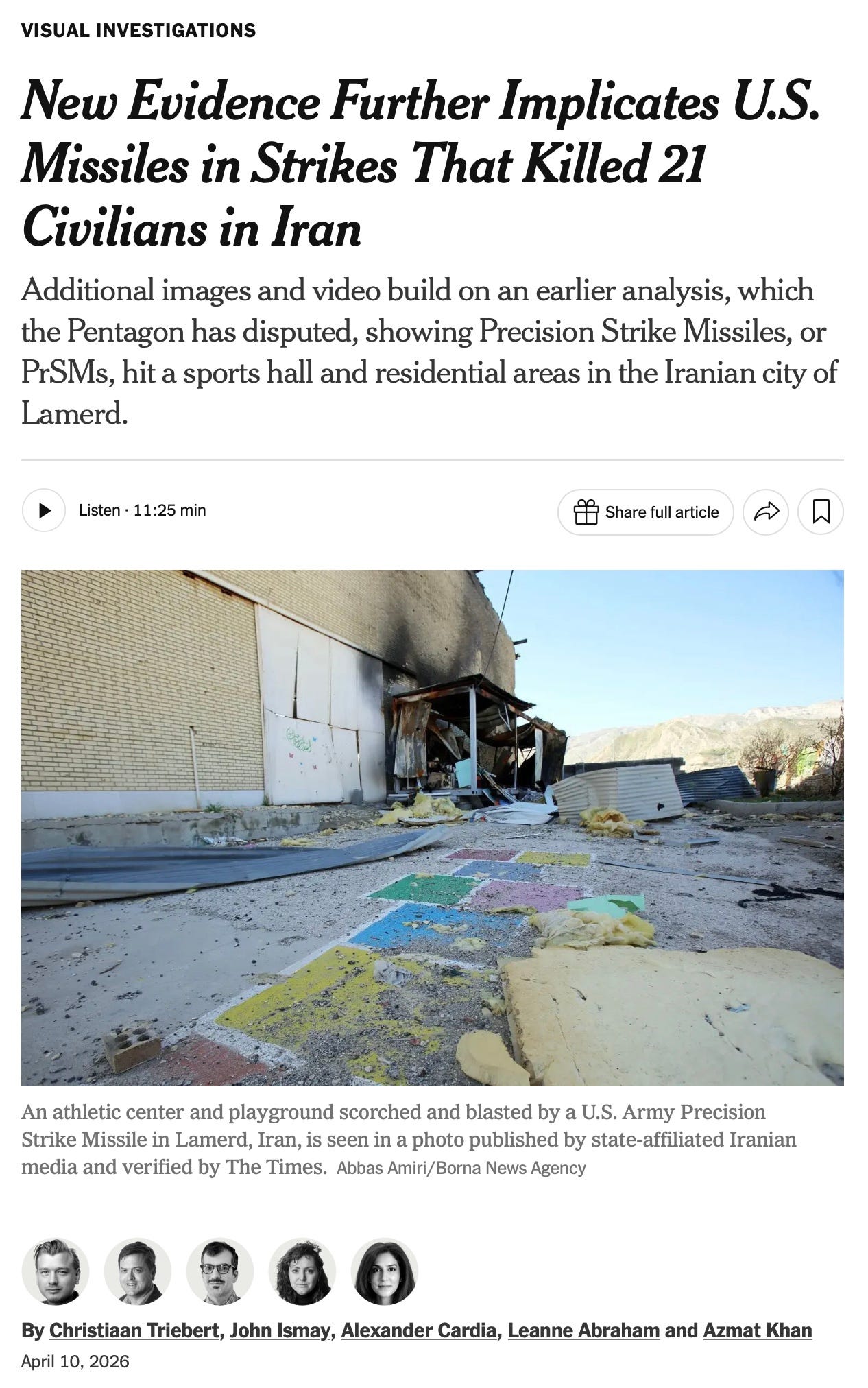
Hours later, two U.S. Precision Strike Missiles (PrSM) hit a sports hall and school complex in Lamerd, in southern Iran’s Fars province. The explosions collapsed a volleyball facility, outdoor playgrounds, and two blocks of family homes. Twenty-one people died. At least four were children. One hundred more were injured. No Iranian soldier was killed. The sports hall was not the intended target; an IRGC facility stood 900 feet away.
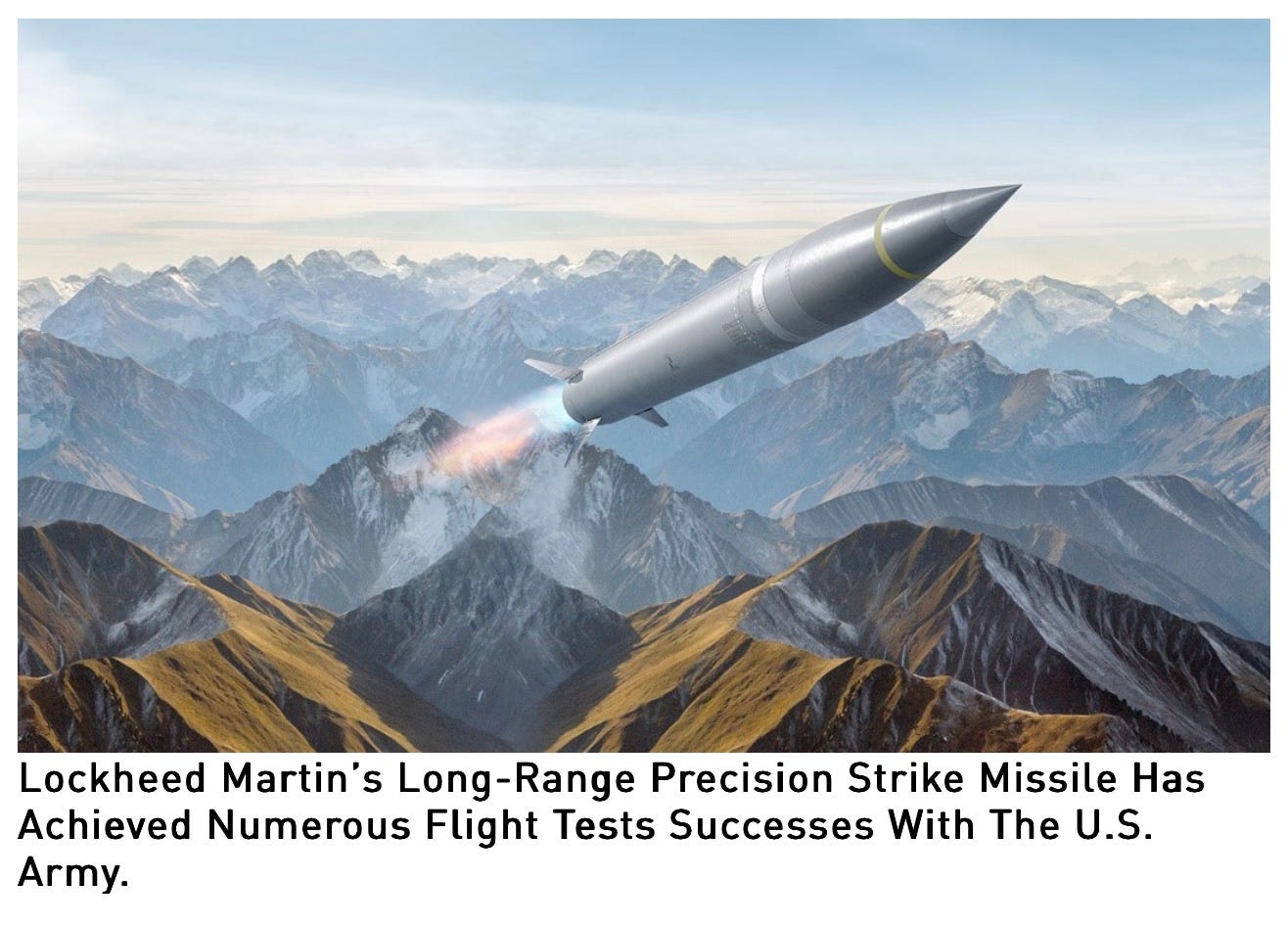
The walls of the Lamerd sports complex show dense, uniform pockmarks. This pattern requires a weapon that detonates in mid-air and scatters fragments across a wide area. The Iranian Hoveyzeh is a point-detonating land-attack missile; it hits a surface and explodes. It cannot produce that pattern.
The weapon that produces that pattern is the PrSM. Analysts at Janes Defence Intelligence reviewed security camera footage and identified the missile from its shape, length, silhouette, and airburst characteristics. McKenzie Intelligence reached the same conclusion independently. Three U.S. officials confirmed it to the New York Times on background. BBC Verify confirmed it independently. Amaël Kotlarski, weapons team lead at Janes, said the PrSM was likely the only weapon in the Pentagon’s arsenal that could have struck Lamerd from U.S. bases in Kuwait, Bahrain, or elsewhere in the Gulf.
The PrSM had never been fired in combat before February 28. It is designed to detonate above its target and disperse 180,000 tungsten pellets in every direction. Someone approved the first combat use of that weapon in a neighborhood with a sports hall full of children.
The Pentagon said U.S. forces had nothing to do with it. The Pentagon said Iran did it.
CENTCOM’s Navy Captain Tim Hawkins issued a formal statement on March 31 about Lamerd: no U.S. operations occurred within 30 miles of the city on the opening day of the war. The damage, he said, was caused by a malfunctioning Iranian Hoveyzeh cruise missile.
A U.S. official briefed on the investigation told The Intercept it was “colossal negligence.” A Senate investigation called it “likely the deadliest child casualty event by American forces since 1991.” Amnesty International called for accountability. The UN High Commissioner for Human Rights Volker Türk and diplomats from Norway and Iceland formally condemned the strike before the UN Human Rights Council. DAWN called on Iran to file a declaration with the International Criminal Court under Article 12(3) of the Rome Statute.
Policy Overhaul and the AI Interface
Both strikes were made possible by decisions Pete Hegseth made before the first missile flew.
In March 2025, immediately after taking office, Hegseth closed the Pentagon’s Civilian Harm Mitigation and Response office. He also closed the Civilian Protection Center of Excellence, created by Congress in 2022 with bipartisan support. Its statutory mandate under 10 U.S. Code § 184 was to prevent civilian deaths in U.S. military operations—to review target lists, audit databases, challenge weapon selections, and maintain the no-strike infrastructure the law required.
Hegseth fired the judge advocates general of the Army, Navy, and Air Force. He cut civilian harm mitigation staff at U.S. combatant commands by more than 90 percent, over the documented objections of generals, admirals, and members of the Joint Chiefs. He made law of war training optional, calling it an “unnecessary distraction” from combat.
These were decisions made before the war about what kind of war this would be. By closing these offices, the administration removed the people who would have caught the mistakes.
The people meant to catch the Minab database error before a missile was assigned to a girls’ school had been removed. The lawyers meant to question the Lamerd weapon selection had been fired. The training that might have prompted someone to raise a flag had been made optional. Neither failure was caught before children died.
In May, the Pentagon’s own Inspector General concluded in a formal report that the Defense Department is actively violating U.S. law by failing to prevent civilian casualties. The Guardian and The Intercept obtained the report. Hegseth did not respond.
On March 13, two weeks after the children were killed, Hegseth addressed the war. “No quarter, no mercy for our enemies,” he said. “No quarter” means no prisoners. It means killing those who attempt to surrender. It is prohibited under international law, the Geneva Conventions, and the Pentagon’s own law of war manual.
Senator Mark Kelly, a Navy combat veteran, took to the floor of the Senate and read directly from that manual, demanding Hegseth clarify the statement and reaffirm that U.S. troops have a duty to refuse illegal orders. Legal experts at Just Security concluded Hegseth’s statement likely violates 18 U.S.C. § 2441.
Hegseth said this two weeks after the children died, and it did not cost him anything.
To fire 13,000 weapons in 38 days—342 per day—required more than policy. It required a targeting system that could process decisions at that speed. The Pentagon built one.
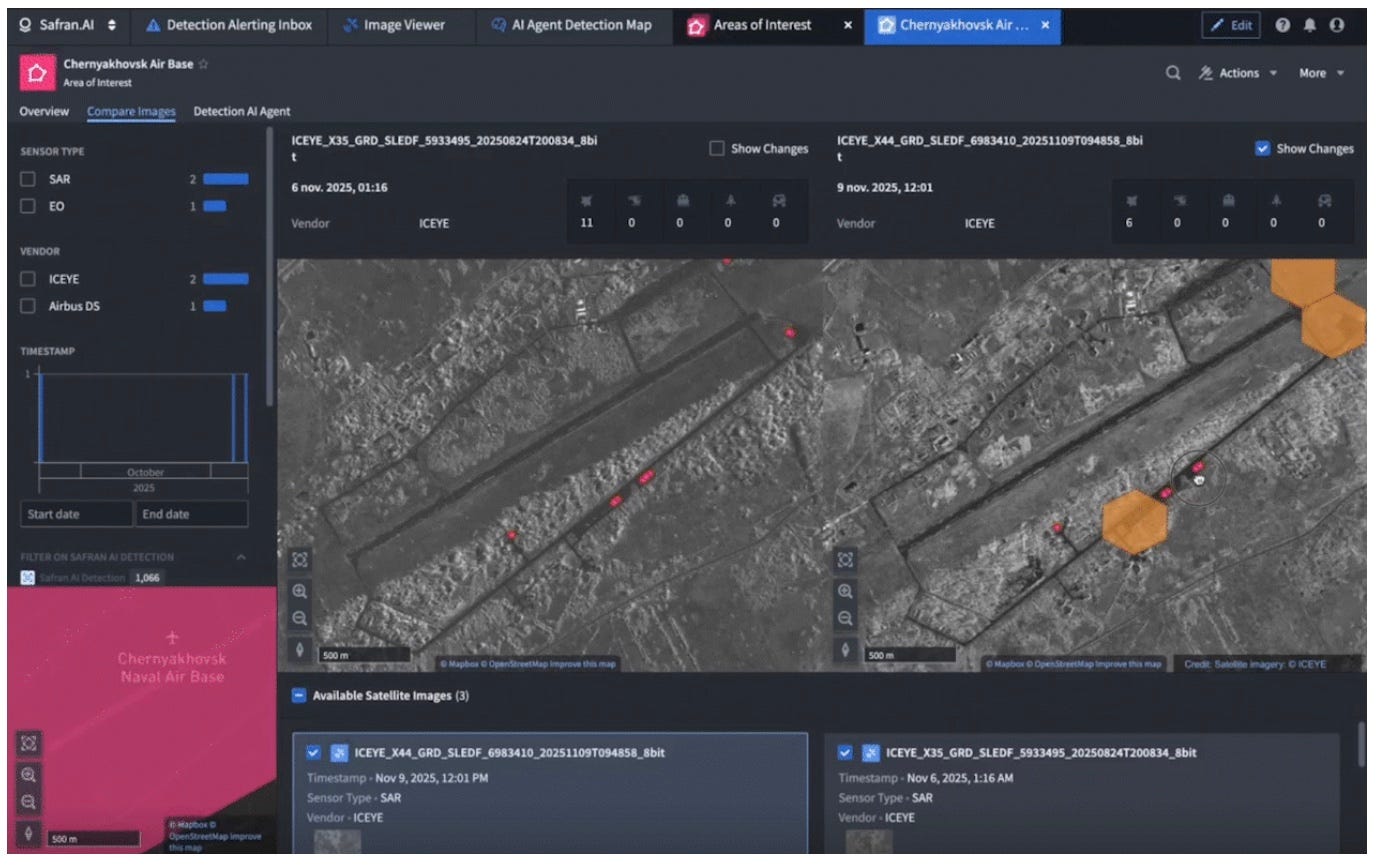
What made it possible was artificial intelligence—specifically, Palantir’s Maven Smart System integrated with Anthropic’s Claude large language model. Before Claude’s integration, Pentagon operators processed about 10 target assessments per day. After: 3,000.
The interface presents operators with a prioritized queue of target cards on a Kanban-style layout. Left-click approves. Right-click rejects. Claude handles the decision logic underneath.
At 342 strikes a day, the left-click is not a review; it is a blind fraction-of-a-second signature on the system’s output. Cameron Stanley, the Pentagon’s Chief Digital and AI Officer, confirmed in May that Pentagon users were processing 20 billion tokens of data per day during Operation Epic Fury.
The danger was not just that software replaced human responsibility. It was that the system spread responsibility across many people, making each approval look like a routine task.
At 20 billion tokens per day, no human being is reading the reasoning, checking the source database, or asking whether the school was flagged. The speed itself is the insulation. When the system moves that fast, it becomes nearly impossible to assign individual accountability.
Failed Oversight and Official Hypocrisy
The military continued using the AI system despite a sudden executive order targeting its software supply chain.
On February 28, the day the missiles flew, President Trump ordered all federal agencies to immediately stop using Anthropic’s tools, designating the company “leftwing nut jobs” and a national security supply chain risk. Anthropic had previously refused Pentagon demands for unrestricted military use of its AI, citing ethical limits on autonomous weapons, and had sued the Defense Department. The military kept the model running anyway during the opening day of the war. Pentagon CTO Emil Michael explained on March 12: “You can’t just rip out a system that’s deeply embedded overnight.”
On March 24, Pentagon Chief Information Officer Kirsten Davies confirmed before a Senate subcommittee that the AI system was in active operational use during Operation Epic Fury. She told Senator Jack Reed of Rhode Island: “The use of the system is active right now.”
When the Maven system ran the Defense Intelligence Agency’s database, it flagged the Minab school coordinates as a valid target. An operator approved the strike in seconds.
The DIA’s database had not been reviewed for over a decade. The school had operated publicly for ten years, featuring a website, painted sports fields, and blue-and-pink walls visible on commercial satellite maps, separated from an adjacent IRGC naval compound by a fence in place since 2016. Targeting officials had relied on outdated intelligence.
The man running the DIA during that database failure was Lieutenant General Jeffrey Kruse. He was not fired for the database error; he was fired because his assessment of U.S. nuclear strikes contradicted President Trump’s claim that Iran’s facilities had been “obliterated.” Senator Mark Warner stated: “The dangerous habit of treating intelligence as a loyalty test rather than a safeguard for our country.” Lieutenant General James Adams replaced him. No one has been held accountable for the database that killed 175 people.
Lockheed Martin, which manufactures the PrSM, finalized an expanded procurement agreement with the Defense Department in the weeks that followed, building on an existing $4.94 billion contract. The Trump administration’s fiscal year 2027 budget request asks Congress for nearly two billion dollars to purchase 1,134 more—four times the previous year’s allocation.
No external legal avenue exists to challenge these strikes.
Internationally, the United States is not a party to the Rome Statute. That 28-year bipartisan consensus, maintained across Republican and Democratic administrations, keeps global prosecutors from reaching American soil. Domestically, the Justice Department answers directly to the president who ordered this war. Legislative oversight has broken down; Republicans control both chambers of Congress.
Senators Elizabeth Warren and Chris Van Hollen, joined by more than 40 colleagues, launched an April investigation into Hegseth’s dismantling of civilian protection programs. Their letter noted that since the start of the war, strikes by U.S. and Israeli forces had killed more than 1,700 civilians and struck more than 20 schools and a dozen healthcare facilities.
Before the Senate Armed Services Committee, Senator Kirsten Gillibrand asked Admiral Brad Cooper how many schools U.S. forces had bombed. Cooper said there was one active civilian casualty investigation, the Minab school, out of 13,629 missions.
Gillibrand asked how he explained the publicly verified damage to 22 schools and 17 healthcare facilities, documented by the New York Times.
“There’s no way that we can corroborate that,” Cooper said. “No indication of that whatsoever, Senator.”
Gillibrand asked whether his command had investigated those claims. Cooper said it had not.
Cooper justified the Minab strike by stating, “Our staff specifically warned the Iranian people more than 100 times about the threat of them being used as human shields.” The children were not human shields; they were attending school.
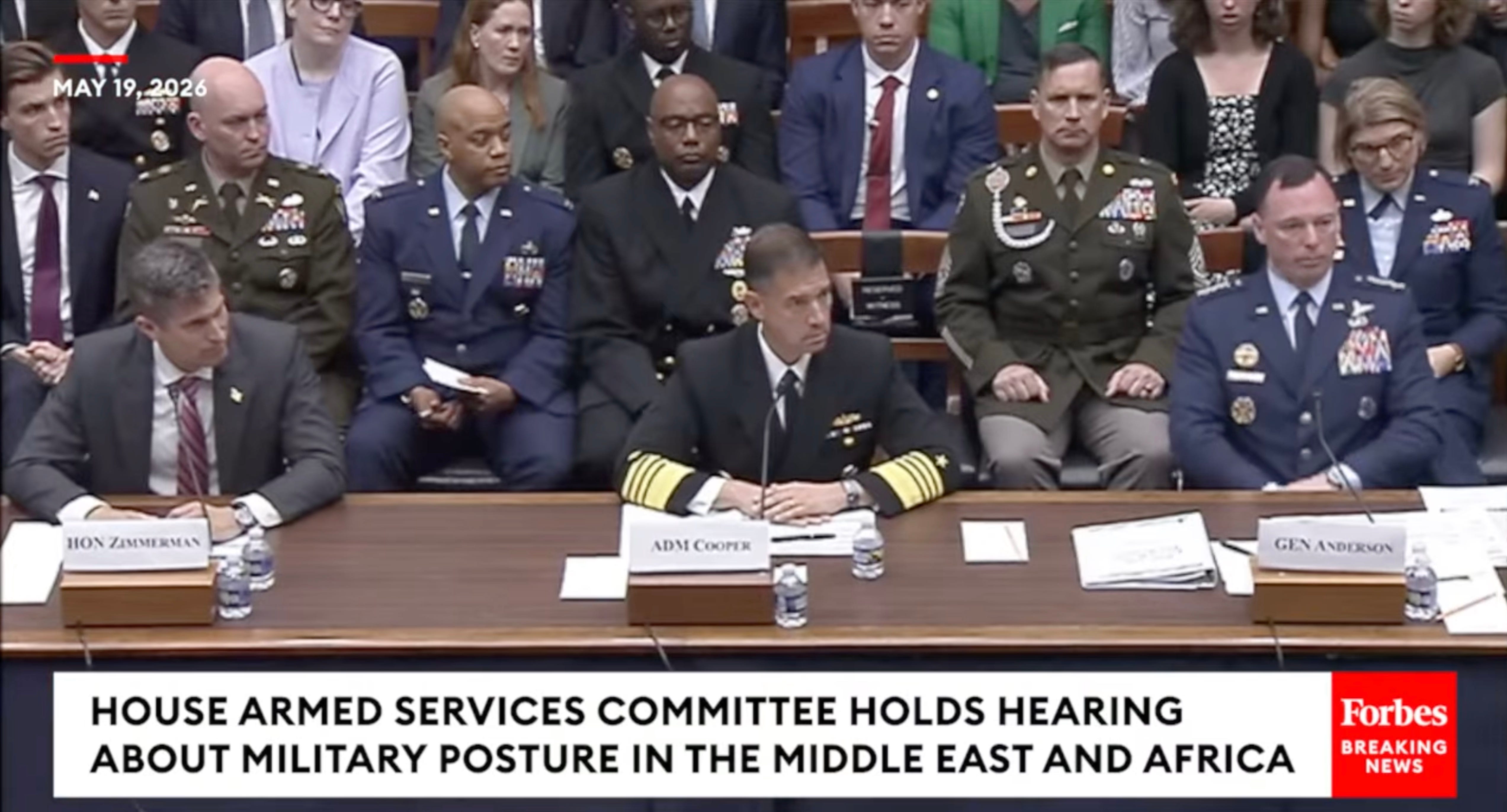
Before the House Armed Services Committee on May 19, Representative Adam Smith pressed Cooper directly: “It’s really pretty clear what happened there. Eighty days on, we have not taken responsibility for that attack. Can you at this moment acknowledge that that mistake was made?”
Cooper referred back to the investigation.
“So that’s a no,” Smith said. “We will not take responsibility for something we very obviously did.”
Representative Sara Jacobs presented Cooper with a letter signed by more than half the Democratic caucus demanding the investigation be made public. Senator Mark Kelly pressed Cooper to reinstate personnel to the Civilian Harm Mitigation and Response Office. Cooper called the question hypothetical. “I’m always looking to organize to purpose,” he said, “and we’ll just see what the investigation shows.”
Cooper said the AR 15-6 investigation into Minab is nearing its end. He would not say when it would conclude.
He would not identify the investigating general officer he appointed to lead it; the targeting officer who approved the Minab coordinates; the CENTCOM J-2 Target Nomination Chief who signed off on the validity of the underlying data feed; the Staff Judge Advocate operational lawyer who reviewed the strike’s proportionality under the laws of armed conflict; the J-3 Director of Operations who authorized launch; or the person who authorized the combat debut of the PrSM 900 feet from a sports hall.
The absolute refusal to apologize, pay reparations, or accept legal responsibility for foreign civilian casualties is the consistent, unbroken posture of the United States government across generations.
This cannot be fixed from the inside.
War Crimes Statute and Historical Precedent
Under 18 U.S. Code § 2441—the federal war crimes statute—a U.S. national who orders or commits a grave breach of the Geneva Conventions is subject to life imprisonment, or death, if the victim dies. Article 51(4) of Additional Protocol I to the Geneva Conventions prohibits indiscriminate attacks—attacks whose effects cannot be directed at a specific military objective or limited as required by international law. Firing a weapon that scatters 180,000 tungsten pellets, 900 feet from a building full of children on its first combat use, meets that definition. More than 100 international law professors said so in April. The ICC agrees. So does the Pentagon’s own law of war manual.
The federal war crimes statute has existed since 1996. It has never been used to prosecute a senior military or civilian official.
In November 1969, Seymour Hersh published the story of what U.S. soldiers did to between 347 and 504 unarmed civilians in the Vietnamese village of My Lai on March 16, 1968.
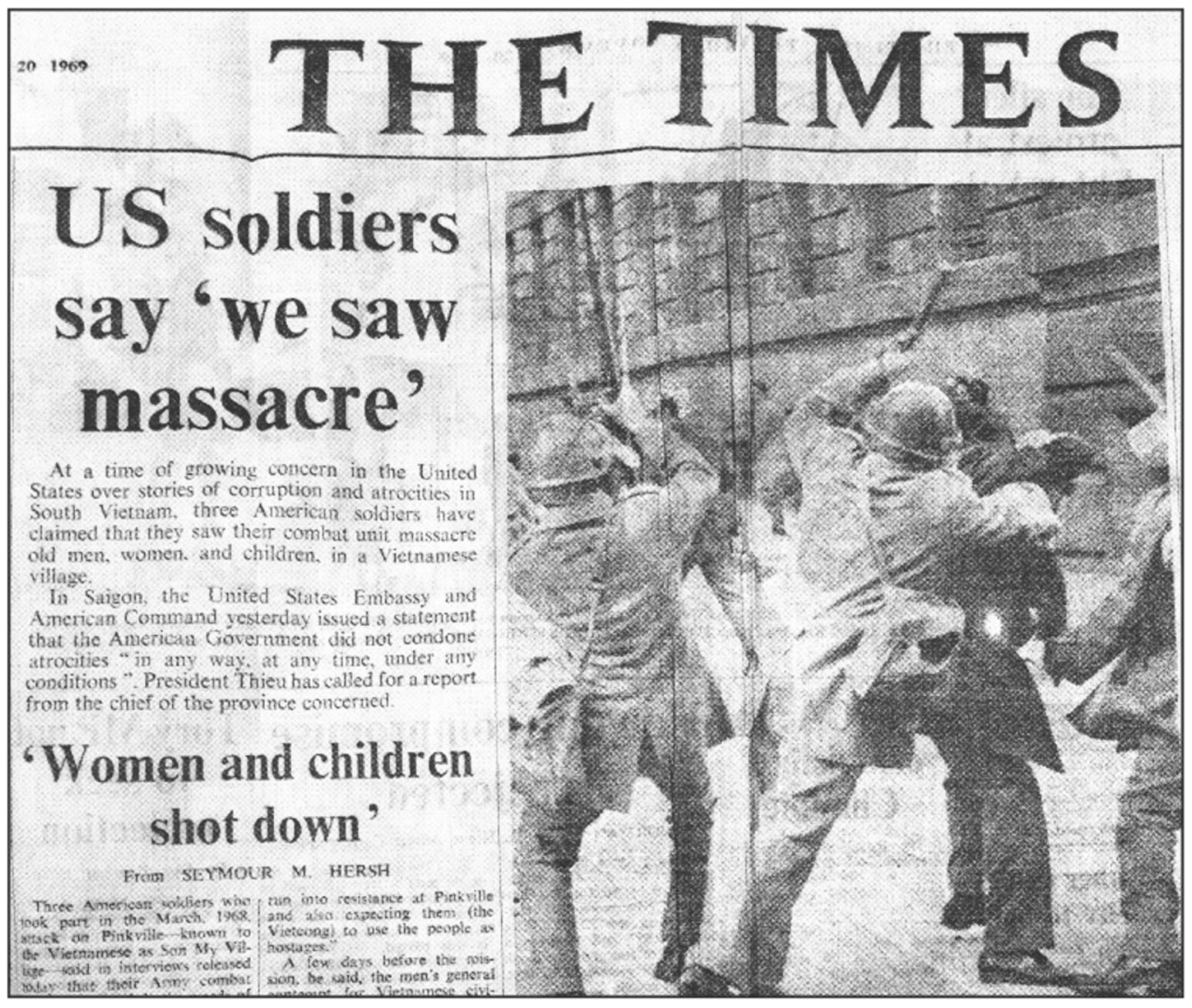
Hersh did not publish a forensic analysis. He named Lieutenant William Calley. He named Captain Ernest Medina. He named the soldiers. He named the village, the date, the ditch where the bodies were found. The Army could ignore a report of civilian deaths; it could not ignore a named officer attached to a specific atrocity on a specific date.
Calley was convicted. Nixon commuted his sentence after three days of house arrest. But Medina’s trial established “The Medina Directive”: a commander is criminally liable if they know, or should have known, about a subordinate’s war crime and fail to act. Under this long-standing U.S. military precedent, commanders cannot legally hide behind an automated algorithm to evade operational intent.
In 2004, photographs from Abu Ghraib documented the systematic torture of Iraqi detainees held by U.S. forces. It was the names—Private Lynndie England, Specialist Charles Graner, Brigadier General Janis Karpinski—that created the pressure for Senate hearings and courts-martial.
Seven enlisted soldiers were convicted. The officials who designed the program were named, investigated, promoted, appointed to federal judgeships, and retired with honors. The law reached the soldiers; it did not reach the officials. But the naming preserved the record of exactly who they were and what they authorized.
In 2015, U.S. forces struck the Doctors Without Borders (MSF) hospital in Kunduz, Afghanistan, repeatedly, for over an hour, after MSF had given CENTCOM its GPS coordinates. MSF named General John Campbell. A 3,000-page investigation followed, naming every link in the chain of command that failed. No one was prosecuted. But the naming forced the investigation, and the investigation produced the record.
In 2021, a U.S. drone strike in Kabul killed ten civilians, including seven children. The press named the driver, Zemari Ahmadi. It named his children. It named the operator. The naming forced the Pentagon to reverse its “righteous strike” claim.
Earlier cover-ups were reactive, clumsy, and human. The system still depended on signed orders, legal reviews, and identifiable personnel files. Because humans had to write and sign their names, independent researchers could pull on a single thread and force the apparatus to crack.
Now, concealment is built into the system before the war begins. The lawyers are gone. The system is automated. It is designed to move faster than oversight can track. By removing the legal guardrails before the war began and routing accountability through an algorithm, the current administration has built a system in which no single human being can be said, with certainty, to have made any individual lethal decision.
The Role of Investigative Newsrooms
Journalists executed the forensic role with precision. The ground documentation began with Tehran-based journalist Negin Bagheri, who interviewed survivors and first reported the local casualties.
Bypassing the Pentagon’s public affairs offices, The New York Times investigators Alexander Cardia and Eric Schmitt expanded on this tracking. Working alongside weapons team leads at Janes Defence Intelligence and McKenzie Intelligence, they acquired commercial satellite photography and matched the ballistic pockmarks on the Lamerd sports complex walls to the blast signature of the PrSM. Independent reporting proved the initial CENTCOM denials were false within 80 days of the launch.
Exposing the weapon and the initial lie is the necessary first step, but it cannot be the last. Filing lawsuits for redacted documents or waiting for official statements allows the military to hide individual decision-makers behind a shield of anonymity. When newsrooms publish the technical specifications of a missile without the identity of the officer who cleared the flight path, the exposure risks turning the slaughter into a mechanical error rather than a human choice.
Under joint military targeting doctrine, these operational roles are mandatory command slots with real names attached to them in personnel logs, targeting files, and internal reviews. The data exists. The tracking files exist.
Once the forensic proof is out, journalists must track down those names. Without them, the algorithm takes the blame, the institution absorbs the crime, and no one is held accountable.
his U.S. government has decided the public does not have the right to know what is being done in their name, to children, with their taxpayer dollars. The law exists. The victims have names.
Farhad Najafi was a soccer coach, killed on the grass while running a drill.
Ilya Hatami, 12, was a 6th-grader who died on the field beside him.
Avina Barzegar was two years old, mortally wounded by tungsten shrapnel while playing in the yard of her home.

Helma Ahmadizadeh, 10, was a 4th-grade volleyball player. She survived the initial detonation inside the sports complex, walked into the ambulance on her own feet, and told her coach, “It feels like something went into my body,” before an undetected shrapnel pellet stopped her heart.

Elham Zaeri, 11, was a 5th grader — Helma’s best friend and volleyball teammate. She was striking a ball across the net when the roof collapsed and killed her.
The names of the people responsible for these and other deaths that day have not appeared in print.
Name them.
Sources and Visual Evidence
Primary Documentaries and Video Forensics
The New York Times Video Reporting Team. (2026). How a New U.S. Weapon Killed 21 Civilians in Iran. Direct visual investigation tracking security cameras, satellite evidence, and the PrSM blast characteristics in Lamerd. Watch the documentary directly on YouTube below.
CNN-News18 International Desk. (2026). Deadly School Strike in Iran: 150 Children Killed in Minab Missile Attack. Global broadcast documenting initial civilian impact metrics, playground rubble, and family first-hand responses at the girls’ school. Watch the investigative broadcast on YouTube below.
Technical and Ballistic Intelligence Reports
The Center for Strategic and International Studies (CSIS). (2026). Precision Strike Missile (PrSM) Weapon System Profile. Full technical blueprint documenting Lockheed Martin’s surface-to-surface weapon system, flight limitations, and payload fragmentation properties. Find and review the telemetry sheets on the CSIS Missile Threat Database at csis.org
Bagheri, Negin. / Khabaronline News Agency. (2026). A Narrative of the Attack on the Lamerd Volleyball Girls: How Helma and Elham Died on the First Day of Airstrikes. Direct primary on-the-ground report from Fars province, containing interviews with the surviving coaches and family metrics. Read the un-redacted primary text at khabaronline.ir
Defense Procurement Liaison. (2020). The US Navy Has an Upgraded Tomahawk: Here’s 5 Things You Should Know. Detailed naval analysis tracking target-card integration, flight-deck infrastructure, and cruise weapon systems. The operational analysis on Defense News is available at defensenews.com
Legal Statutes and Command Accountability
Just Security Editorial Board. (2026). PrSMs in Iran War: U.S. Obligation to Conduct Legal Review. Legal evaluation of the principle of distinction, indiscriminate weapon airburst parameters, and legal obligations under international humanitarian law. Read the complete study on the Just Security Portal here: justsecurity.org
Legal Information Institute. (1996). 18 U.S. Code § 2441 - War Crimes. Full statutory text detailing grave breaches of the Geneva Conventions, life imprisonment thresholds, and federal criminal penalties for United States nationals. View the law on the Cornell Law School Portal at cornell.edu
The International Criminal Court. (1998). Rome Statute Article 12(3) Jurisdictional Declarations. Global legal framework tracking voluntary state declarations and third-party prosecutorial thresholds on foreign territory. Access the baseline rules via the International Criminal Court Legal Tools Database at icc-cpi.int
PLAYABLE VIDEOS
CNN-News18 International Desk. (2026). Deadly School Strike in Iran: 150 Children Killed in Minab Missile Attack. A major investigative broadcast tracking the first wave of airstrikes against the Shajareh Tayyebeh girls’ school, documenting the initial civilian impact metrics, international outrage, and independent probe demands. Full broadcast media link available on YouTube here:
The New York Times Video Reporting Team. (2026). How a New U.S. Weapon Killed 21 Civilians in Iran. Frame-by-frame analysis of security camera footage, satellite evidence, and tracking of the PrSM blast characteristics in Lamerd. Watch the YouTube video of The New York Times forensic visual investigation here: